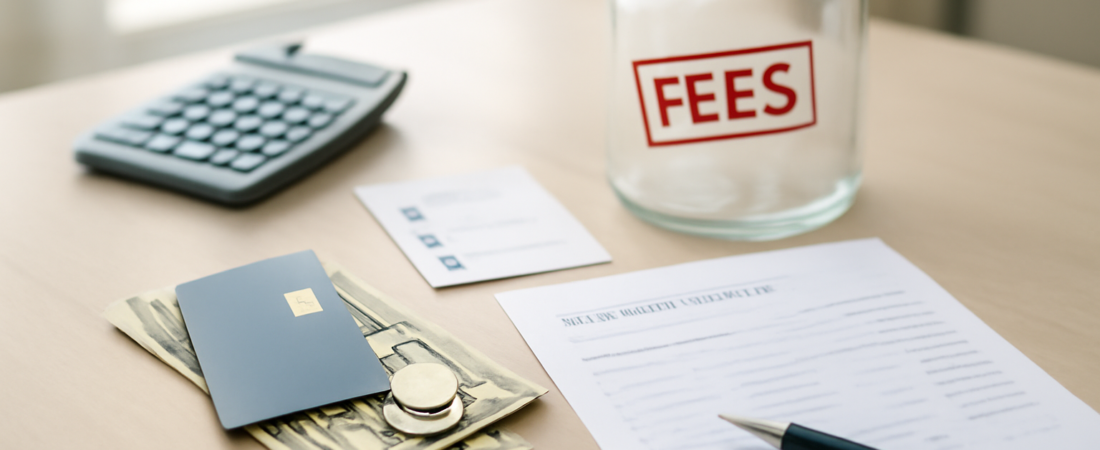
If you want to avoid bank fees, the best place to start is understanding exactly how your account charges work. Many U.S. consumers pay avoidable costs for monthly maintenance, overdrafts, out-of-network ATMs, paper statements, transfers, and inactive accounts simply because they never reviewed the fee schedule or changed their banking habits.
The good news is that most everyday banking fees can be reduced or eliminated with a few practical choices. You do not need to be a financial expert. You need the right account, the right settings, and a simple routine for monitoring your money.
This guide explains 12 practical ways to avoid bank fees in the United States, what to check before opening or keeping an account, and how to build habits that protect your balance month after month.
Why Bank Fees Add Up Faster Than You Think
Bank fees often seem small when viewed one at a time. A maintenance charge here, an ATM fee there, and one accidental overdraft may not feel dramatic. But recurring fees can quietly reduce your savings, especially if your checking account is where paychecks, bills, subscriptions, and transfers all flow.
Fees also tend to happen when money is already tight. Overdrafts, returned payments, and late account transfers can create a chain reaction that makes it harder to recover. That is why learning how to avoid bank fees is not just about saving a few dollars. It is about keeping your cash flow predictable.
Before making major decisions, review your bank’s current fee schedule and account agreement. Fee policies vary by institution and can change. For general consumer finance education, the Consumer Financial Protection Bureau is a helpful official resource.
1. Choose an Account Designed to Help You Avoid Bank Fees
The easiest way to avoid bank fees is to start with the right account. Many banks and credit unions offer multiple checking options, and the names can be confusing. One account may waive monthly fees only if you meet direct deposit or balance requirements, while another may have no monthly maintenance fee at all.
When comparing accounts, look beyond the promotional language. Read the fee schedule and note whether the account charges for monthly maintenance, paper statements, replacement debit cards, official checks, wire transfers, stop payments, and inactivity. If you frequently use cash, check the ATM network. If you travel, review foreign transaction and international ATM policies.
Online banks and credit unions may offer lower-fee options, but they are not automatically best for everyone. Consider customer service access, cash deposit needs, branch availability, mobile app reliability, and whether deposits are federally insured through the appropriate agency. The goal is not to pick the trendiest account. It is to pick one that matches how you actually bank.
2. Know the Monthly Maintenance Fee Rules
Monthly maintenance fees are among the most common checking account charges. Many accounts waive the fee if you meet certain requirements, such as maintaining a minimum balance, receiving qualifying direct deposits, being a student, or linking another account. These rules vary widely.
To avoid bank fees tied to monthly maintenance, write down the exact waiver requirement for your account. Do not rely on memory or assumptions. If the account requires a minimum daily balance, one low-balance day may matter. If it requires direct deposit, not every electronic transfer will qualify.
If you cannot comfortably meet the waiver requirement every month, ask the bank whether you can switch to a lower-cost account. Many people keep paying fees because they do not realize they can change account types without leaving the institution.
3. Set Up Direct Deposit When It Makes Sense
Direct deposit can be one of the simplest ways to qualify for fee waivers. Employers, government benefit programs, pensions, and other income sources may offer electronic deposit. If your bank waives monthly maintenance fees for qualifying deposits, this can help you avoid bank fees without extra monthly effort.
However, confirm what counts as a qualifying deposit. A transfer from your own account at another bank may not count. A peer-to-peer payment may not count. Some banks define eligible deposits narrowly, so read the terms before assuming the fee will be waived.
If you have multiple accounts, you may also be able to split direct deposit between checking and savings. This can support both fee waivers and automatic saving, but make sure the deposit amount is enough to meet any account requirement.
4. Keep a Balance Buffer to Prevent Accidental Charges
A small balance buffer can protect you from overdrafts, returned payments, and minimum balance problems. Think of it as money you do not spend unless there is a real emergency. The right buffer depends on your income timing, bills, and account rules.
This strategy helps you avoid bank fees because many charges happen when a bill posts earlier than expected, a subscription renews, or a debit card purchase clears after a delay. Even if you track carefully, transaction timing can be unpredictable.
Start with a buffer you can realistically build. If money is tight, add a small amount each payday. Treat the buffer as part of your account’s floor, not as available spending money. Over time, that cushion can prevent expensive mistakes.
5. Opt Out of Debit Card Overdrafts If Appropriate
Overdraft rules can be confusing. For many one-time debit card and ATM transactions, banks generally need your permission before allowing overdraft service that may trigger a fee. If you opt out, the transaction may be declined instead of approved into a negative balance.
Opting out can help you avoid bank fees, but it is not a complete solution. Recurring debit payments, checks, ACH payments, and automatic bill payments may still be handled differently depending on your bank’s policies. Review your overdraft settings and ask your bank to explain what happens for each type of transaction.
Some institutions also offer overdraft protection transfers from a linked savings account or line of credit. These may still involve fees or interest, so compare the cost and terms before enrolling.
6. Turn On Low-Balance and Transaction Alerts
Alerts are one of the most useful free tools in modern banking. Most banks allow you to set email, text, or app notifications for low balances, large transactions, deposits, card-not-present purchases, and upcoming payment activity.
To avoid bank fees, set a low-balance alert above your true danger zone. For example, if your account has a minimum balance rule, set the alert higher than that threshold so you have time to transfer money or reduce spending. If your pay schedule is irregular, alerts can help you catch timing gaps before bills post.
Review alerts after major life changes, such as a new job, new rent amount, new loan payment, or added family expenses. Alerts only work well when the thresholds match your current budget.
7. Use In-Network ATMs and Cash-Back Options
Out-of-network ATM fees can come from both your bank and the ATM owner. If you regularly withdraw cash, these charges can become a recurring drain. The simplest way to avoid bank fees for ATM use is to know your bank’s ATM network and plan withdrawals before you need cash urgently.
Use your bank’s app or website to find in-network ATMs. If your bank participates in a shared network, learn the network name and logo. Some retailers also offer debit card cash back at checkout, which may be a lower-cost way to get cash, though store policies vary.
Be cautious with ATMs in convenience stores, bars, hotels, entertainment venues, and tourist areas. They may be convenient, but convenience often comes with higher costs. Always review the on-screen fee disclosure before confirming a withdrawal.
8. Replace Paper Statements with Electronic Statements
Some accounts charge for paper statements or offer better terms when you choose electronic statements. E-statements can also reduce clutter and make it easier to search past transactions.
If you switch to electronic delivery to avoid bank fees, make sure you can reliably access your account online. Use a strong password, enable multi-factor authentication when available, and download or save important statements if you need them for tax, loan, or recordkeeping purposes.
Do not ignore statements just because they are digital. Set a calendar reminder to review your monthly statement for errors, duplicate charges, unexpected subscriptions, or new fees.
9. Be Smart About Transfers, Wires, and Payment Apps
Not all money transfers cost the same. Standard ACH transfers are often lower cost than wire transfers, but they may take longer. Wire transfers can be useful for certain time-sensitive or high-value transactions, but they often come with fees and may have limited reversibility.
To avoid bank fees, match the transfer method to the real need. Do not pay for speed if a standard transfer is acceptable. Check whether your bank charges for outgoing transfers, incoming wires, expedited payments, stop payments, or transfers made with customer service assistance.
Peer-to-peer payment apps can be convenient, but treat them carefully. Confirm recipients, avoid sending money to strangers, and understand whether instant transfer options cost extra. For important transactions, read the app and bank terms before relying on the service.
10. Watch for Subscription and Automatic Payment Problems
Automatic payments are convenient, but they can create fees if they hit at the wrong time or renew after you forgot about them. Streaming services, apps, memberships, storage plans, insurance drafts, and loan payments can all affect your checking balance.
A monthly subscription review can help you avoid bank fees and reduce unnecessary spending. Look for duplicate services, free trials that converted to paid plans, and subscriptions attached to old debit cards. Cancel what you no longer use and update payment dates when possible to align with your income schedule.
For critical bills, consider using bill pay reminders rather than automatic payment if your income varies. If you do use autopay, keep a buffer in the account and monitor pending transactions.
11. Ask for a Courtesy Waiver When You Make a Mistake
If you are charged a fee after a rare mistake, contact your bank politely and ask whether a courtesy waiver is available. Banks are not required to waive fees, and there is no guarantee, but some may consider your account history, the circumstances, and whether it is a first-time issue.
This is not a long-term plan to avoid bank fees, but it can help if you had an unusual timing problem, a delayed paycheck, or a misunderstanding about account rules. Be clear, brief, and respectful. Ask what caused the fee and what you can do to prevent it next time.
If the bank will not waive the charge, use the conversation to gather information. You may learn that a different account type, alert setting, or overdraft option would better fit your needs.
12. Review Your Account Every Six Months
Your banking needs change over time. A student account may no longer fit after graduation. A high-minimum account may not work after a job change. A branch-based bank may become less useful after you move. A fee-free account can become less attractive if your cash or transfer needs change.
Set a twice-yearly reminder to review your accounts. Check fee schedules, interest rates, ATM access, mobile features, customer service, and whether you are meeting waiver requirements. This routine can help you avoid bank fees before they become a pattern.
If your bank no longer fits, compare alternatives. Consider banks, credit unions, and online options. Make sure you understand how to move direct deposits and automatic payments before closing an account. Keep the old account open long enough to catch delayed transactions, if appropriate.
Quick Checklist to Avoid Bank Fees
- Read your current account fee schedule and save a copy for reference.
- Confirm the exact monthly maintenance fee waiver rules.
- Set up qualifying direct deposit if it helps waive fees.
- Create a balance buffer and treat it as unavailable for spending.
- Review and adjust overdraft settings for debit, ATM, ACH, and checks.
- Turn on low-balance, deposit, and large-transaction alerts.
- Use in-network ATMs or plan cash withdrawals in advance.
- Switch to electronic statements if paper statements cost extra.
- Use standard transfers when speed is not necessary.
- Review subscriptions and automatic payments monthly.
- Ask about courtesy waivers for rare mistakes, without expecting approval.
- Reevaluate your bank account at least twice a year.
Common Bank Fees to Look For
When reviewing your account, scan for these common charges. Not every bank charges all of them, and terms vary, but knowing the categories makes it easier to compare accounts.
- Monthly maintenance fee: A recurring account charge that may be waived if you meet specific conditions.
- Overdraft fee: A charge that may apply when transactions exceed your available balance, depending on the transaction type and your account settings.
- Returned item or insufficient funds fee: A fee that may apply when a payment is returned unpaid.
- Out-of-network ATM fee: A charge for using an ATM outside your bank’s approved network.
- Wire transfer fee: A charge for sending or receiving certain wire transfers.
- Paper statement fee: A fee for receiving mailed statements instead of electronic statements.
- Foreign transaction fee: A charge that may apply to purchases or withdrawals involving foreign currency or international processing.
- Inactivity fee: A possible charge if an account has no activity for a certain period, depending on the institution and account type.
For more practical money and daily life tips, you can also visit New York Life Book.
Conclusion: Small Banking Habits Can Protect Your Money
You do not have to accept bank fees as a normal part of managing money. With the right account, clear alerts, careful overdraft settings, smart ATM habits, and regular reviews, you can avoid bank fees more consistently and keep more of your income working for you.
Start with one step today: open your account fee schedule, identify the top two fees you are most likely to pay, and make a plan to prevent them. Small changes can make your checking account easier to manage and your monthly budget more predictable.
Leave a Reply