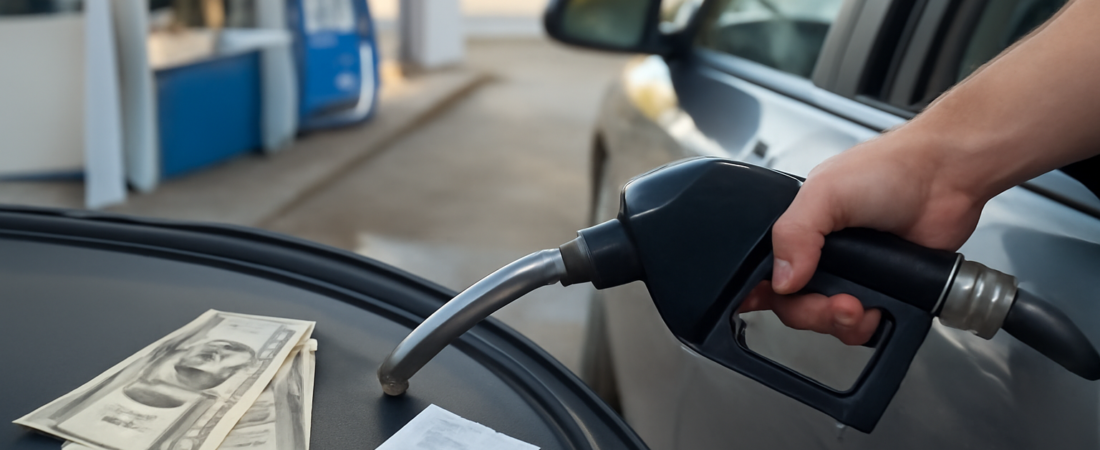
Trying to save money on gas can feel frustrating when fuel prices change from week to week and your commute is not optional. The good news is that small, consistent habits can reduce how often you fill up and how much you spend when you do. You do not need a new car or a complicated strategy. You need a practical plan that fits your real driving life.
This guide focuses on everyday choices U.S. drivers can make: smoother driving, better trip planning, basic maintenance, smart payment options, and knowing when a deal is actually worth it. Not every tip will apply to every driver, but combining several of them can help you build a realistic fuel-saving routine.
Before changing your habits, remember that vehicle condition, local traffic, terrain, weather, and fuel prices all affect results. For general energy and vehicle efficiency information, you can also review resources from the U.S. Department of Energy.
1. Drive Smoothly to Save Money on Gas
One of the simplest ways to save money on gas is to drive more smoothly. Rapid acceleration, hard braking, and last-second lane changes can waste fuel because your engine works harder than necessary. Smooth driving does not mean driving slowly everywhere. It means anticipating traffic and using steady inputs.
Start by looking farther ahead. If you see a red light, stop sign, or slowing traffic, ease off the accelerator early instead of racing forward and braking hard. When the light turns green, accelerate gradually rather than flooring it. On highways, avoid constantly speeding up and slowing down when a steady pace would do.
This habit is especially useful for city drivers, delivery workers, rideshare drivers, and anyone who spends a lot of time in stop-and-go traffic. It can also reduce wear on brakes and tires, which may help lower overall vehicle costs.
2. Use Cruise Control When It Makes Sense
Cruise control can help you save money on gas on open highways because it keeps your speed consistent. A steady speed generally uses fuel more efficiently than repeated acceleration and deceleration. This is most helpful on flat roads with light traffic.
However, cruise control is not always the best choice. Avoid using it in heavy traffic, bad weather, construction zones, or on steep hills where the system may accelerate aggressively to maintain speed. In those situations, your judgment may be more efficient and safer.
If your vehicle has adaptive cruise control, learn how it works before relying on it. Some systems maintain distance smoothly, while others may brake and accelerate more abruptly depending on traffic. Your owner’s manual is the best place to confirm recommended use.
3. Keep Tires Properly Inflated
Underinflated tires increase rolling resistance, which means your engine must work harder to move the vehicle. Checking tire pressure is a low-cost habit that can help you save money on gas and improve tire life.
Use the tire pressure listed on the sticker inside the driver’s door or in your owner’s manual, not the maximum pressure printed on the tire sidewall. Tire pressure changes with temperature, so it is smart to check more often during seasonal shifts. A basic tire pressure gauge is inexpensive and easy to keep in the glove box.
Try to check pressure when tires are cold, such as before driving in the morning. If you are already at a gas station after driving, the reading may be higher because tires heat up on the road. Keeping tires properly inflated also supports safer handling and braking.
4. Remove Unnecessary Weight and Drag
If your trunk or cargo area has become a rolling storage unit, clean it out. Extra weight can reduce efficiency, especially in smaller vehicles and during city driving. Removing unnecessary items is an easy way to save money on gas without changing your route or schedule.
Also pay attention to aerodynamic drag. Roof racks, cargo boxes, bike racks, and open windows at highway speeds can make your vehicle work harder. If you use roof-mounted gear only occasionally, remove it when it is not needed.
This does not mean you should skip emergency essentials. Keep items that support safety, such as a spare tire if your vehicle uses one, basic roadside supplies, and weather-appropriate emergency gear. The goal is to remove clutter, not important safety equipment.
5. Plan Routes Before You Leave
Better trip planning can help you save money on gas by reducing unnecessary miles, avoiding heavy congestion, and combining errands. A few minutes of planning can prevent repeated short trips throughout the week.
When possible, group errands by location. For example, stop at the grocery store, pharmacy, and bank on one route instead of making separate trips on different days. If you commute, compare routes for distance, traffic, and stoplights. The shortest route is not always the most fuel-efficient if it involves constant stopping.
Navigation apps can be useful, but do not blindly follow every detour. A route that saves three minutes but adds several miles may not be worth it. Think in terms of total cost, not just arrival time.
6. Compare Fuel Prices, but Do Not Chase Tiny Savings
Price comparison apps and station signs can help you find cheaper fuel nearby. This can be a practical way to save money on gas, especially if several stations are located along your normal route.
Be careful, though, about driving far out of your way for a small discount. If you burn extra fuel to reach a cheaper station, the savings may disappear. A good rule of thumb is to prioritize lower prices that are already near your commute, errands, school drop-off, or weekly routine.
Also check whether the posted price requires a specific payment method, membership, or cash payment. Some stations show a cash price that is lower than the credit card price. That can still be a good deal, but only if it works for your budget and safety preferences.
7. Use Fuel Rewards and Credit Card Benefits Carefully
Fuel rewards programs, grocery store points, warehouse club memberships, and credit card cash-back offers may help you save money on gas. The key is using them without overspending elsewhere.
If a grocery program gives fuel discounts, make sure you are not buying more expensive groceries just to earn points. If a credit card offers gas rewards, pay attention to fees, interest rates, spending caps, and whether you pay the balance in full. Interest charges can easily erase rewards.
Warehouse clubs can be useful for some households, but the membership fee matters. If you already shop there and the station is convenient, fuel savings may be a bonus. If you would join only for gas, estimate your likely savings before paying for a membership.
How to Evaluate a Gas Rewards Offer
- Check whether the discount applies to every gallon or only a limited amount.
- Confirm expiration dates for points or rewards.
- Compare the discounted price with nearby stations.
- Include any membership fee or card fee in your calculation.
- Avoid carrying credit card debt just to earn fuel rewards.
8. Maintain Your Vehicle on Schedule
Routine maintenance can help your car run efficiently and may help you save money on gas over time. Follow the maintenance schedule in your owner’s manual, especially for oil changes, air filters, spark plugs, and other items recommended for your vehicle.
A neglected engine may work harder than necessary. Worn parts, dirty filters, poor alignment, or dragging brakes can affect fuel use and safety. If your check engine light is on, do not ignore it. Some issues that trigger warning lights can also hurt fuel economy.
Not every maintenance service advertised by a shop is necessary at that moment. Use your owner’s manual as the baseline, ask questions, and keep records. If you are unsure about a costly repair, getting a second opinion can be reasonable.
9. Avoid Excessive Idling
Idling uses fuel while moving you nowhere. Cutting unnecessary idling is a straightforward way to save money on gas, especially during school pickup lines, drive-through waits, long parking lot conversations, and warming up the car longer than needed.
Modern vehicles generally do not need long warm-up periods in normal conditions, though you should always prioritize safety, visibility, and manufacturer guidance. In cold weather, clear windows fully before driving. If you need heat for defrosting, use it, but avoid letting the car run for a long time just for comfort.
Some newer vehicles have automatic start-stop technology. If your car has it, learn how it works and when it activates. If you find it uncomfortable in certain situations, check your manual for settings, but remember that reducing idle time is part of its purpose.
10. Consider Alternatives for Short Trips
For very short trips, your vehicle may use more fuel per mile because the engine does not have much time to operate efficiently. Walking, biking, carpooling, public transit, or combining trips can help you save money on gas while reducing vehicle wear.
This does not have to be all or nothing. You might walk to a nearby store once a week, carpool to an event, or use public transportation for a downtown trip where parking is expensive. Even replacing one or two short drives each week can support your budget.
If you work remotely part time, consider scheduling errands on days you are already driving instead of making a separate trip. If your household has more than one vehicle, use the more fuel-efficient one for longer drives when practical.
Smart Fuel Buying Habits That Support Your Budget
Beyond driving habits, the way you buy fuel matters. To save money on gas, pay attention to timing, location, and payment methods without letting fuel shopping become stressful.
Fill up before the tank is nearly empty if that gives you more choices. When you are forced to buy gas immediately, you may have to accept a higher price. If you know you will pass a lower-priced station during your normal routine, plan to stop there before the warning light comes on.
Use the fuel grade recommended in your owner’s manual. If your vehicle requires premium fuel, follow that guidance. If your vehicle only recommends regular fuel, buying premium may not provide a meaningful benefit. Do not rely on assumptions; check your manual.
Keep receipts or use a budgeting app to track fuel spending for a month. This can reveal patterns, such as higher costs from weekend errands, inefficient routes, or frequent small fill-ups at expensive stations. For more household money ideas, you can also explore practical guides at New York Life Book.
Quick Checklist to Save Money on Gas This Week
If you want a simple starting point, use this checklist. You do not need to do everything at once. Pick three or four actions and build from there.
- Check tire pressure before your next long drive.
- Remove heavy items from your trunk or cargo area.
- Plan errands in one route instead of several short trips.
- Compare gas prices along routes you already drive.
- Accelerate gently and brake earlier when traffic allows.
- Use cruise control on open highways when conditions are safe.
- Review your vehicle’s recommended fuel grade.
- Turn off the engine during long waits when safe and practical.
- Check whether a grocery or fuel rewards program fits your normal spending.
- Track fuel spending for one month to find habits you can improve.
Common Mistakes That Can Cost Drivers More
Many drivers try to save money on gas but accidentally make choices that reduce or eliminate the savings. One common mistake is driving several miles to save a few cents per gallon. Unless you are already nearby or filling a large tank, the extra distance may not be worth it.
Another mistake is ignoring basic maintenance because it feels like an expense. Skipping essential service can lead to bigger repairs and may affect fuel efficiency. Preventive maintenance is not exciting, but it is often part of responsible car ownership.
Some drivers also focus only on the price per gallon while ignoring total transportation costs. Parking fees, tolls, insurance, depreciation, and repairs all matter. Saving on fuel is useful, but the biggest budget wins often come from reducing unnecessary driving and making your vehicle last longer.
How to Make Fuel Savings a Habit
The best way to save money on gas is to turn fuel-conscious choices into habits. You should not have to think about every mile. Set up a routine that makes the efficient choice the easy choice.
For example, keep a tire gauge in your car, remove unused roof racks after trips, save your preferred gas stations in a map app, and set a monthly reminder to review fuel spending. If you share a vehicle with family members, agree on basic habits such as not leaving the car idling and keeping the trunk clear.
It also helps to connect fuel savings to a specific goal. Maybe you want to build an emergency fund, reduce credit card debt, save for a vacation, or make room in your budget for groceries. When the savings have a purpose, the habits are easier to maintain.
Conclusion: Small Changes Can Add Up
You do not need a perfect strategy to save money on gas. Start with the basics: drive smoothly, maintain your tires, plan trips, avoid unnecessary idling, and compare prices where it is convenient. Then add rewards programs or payment strategies only if they fit your normal spending.
Fuel costs may not be fully under your control, but your habits are. By making practical changes and reviewing your routine, you can reduce waste, make fewer unnecessary trips, and keep more money available for the rest of your budget.
Leave a Reply