Latest posts
-
How to Get a Good Faith Estimate Before a Medical Procedure

Learn how to request a Good Faith Estimate, what information to provide, which charges to check, and what to do if the final bill is much higher.
-
How to Appeal a Denied Health Insurance Claim Step by Step

Learn how to appeal a denied health insurance claim, from reviewing the denial and gathering records to meeting deadlines and requesting an external review.
-
How to Check If a Medical Procedure Requires Prior Authorization

Learn how to verify prior authorization requirements before a procedure, what information to gather, whom to contact, and how to document the answer.
-
How to Read an Explanation of Benefits (EOB) After a Medical Visit
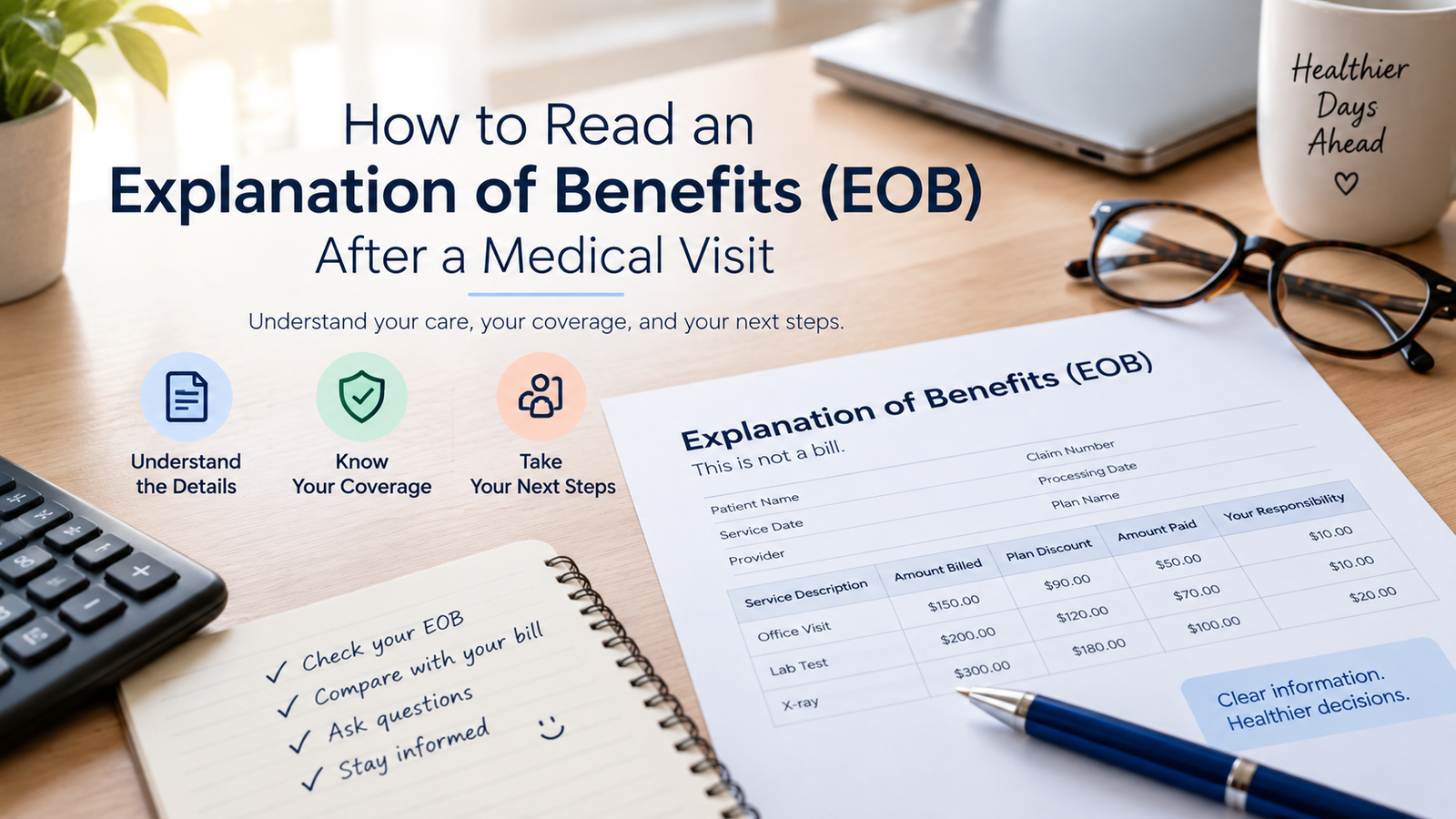
Learn how to read an Explanation of Benefits after a medical visit, including billed charges, allowed amounts, insurer payments, claim status, and what you may owe.
-
How to Read a Health Insurance Summary of Benefits and Coverage (SBC)

Learn how to read a health insurance Summary of Benefits and Coverage, compare plan costs, check networks, and spot questions to ask before enrolling or using care.
-
HMO vs PPO: What’s the Difference and Which Is Better for You?

An HMO usually costs less but uses a more limited network and coordinated care. A PPO generally offers more provider flexibility at a higher potential cost. Compare referrals, networks, premiums, and total yearly expenses to choose the better fit.
-
How to Find Out If a Doctor Is In-Network Before Your Visit

Learn how to verify a doctor’s network status before making an appointment, what to ask the insurer and provider’s office, and how to document the answers so you can reduce the risk of an unexpected medical bill.
-
Out-of-Pocket Maximum: 10 Things to Know About Health Insurance Costs

A large medical bill can be stressful, but one number in your health insurance plan can help you understand how much financial risk you may face during the year: your out-of-pocket maximum. The out-of-pocket maximum, also called the out-of-pocket limit, is generally the most you have to pay during a plan year for covered services…
-
Copay vs Coinsurance: 10 Key Differences to Know
Understanding copay vs coinsurance can make health insurance much easier to use. Both are forms of cost sharing, which means they are amounts you may pay when receiving covered health care. However, they calculate your share of the bill in very different ways. A copay is generally a fixed dollar amount for a covered service.…
-
Health Insurance Deductible: 10 Things You Need to Know Before Choosing a Plan

Understand how deductibles work, what counts toward them, and how to compare U.S. health plans with more confidence.