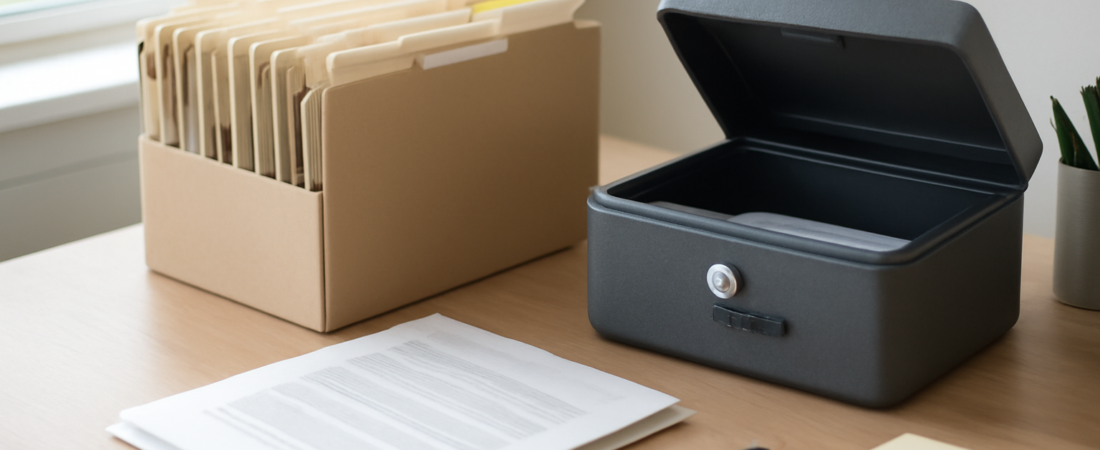
If you want to organize important documents at home, the best system is simple enough to use on a busy weekday and secure enough to protect your family during an emergency. Paperwork can pile up quickly: tax forms, insurance policies, medical records, mortgage papers, car titles, school records, passports, and financial statements. When those items are scattered across drawers, email inboxes, and old envelopes, finding one document can become stressful at exactly the wrong time.
The goal is not to create a perfect office-style archive. The goal is to build a practical home document system that helps you find what you need, know what to keep, protect sensitive information, and reduce clutter. These 10 tips are designed for U.S. households and can be adapted whether you live alone, manage documents for a family, or help an aging parent stay organized.
Why It Matters to Organize Important Documents
When you organize important documents, you save time, reduce the risk of missed deadlines, and make it easier for trusted family members to help if needed. A clear system can also support emergency planning. If you must leave home quickly because of a storm, fire, medical situation, or family crisis, you will know where your identification, insurance information, and critical records are located.
Document organization also protects your privacy. Old bank statements, tax paperwork, medical records, and insurance forms can contain Social Security numbers, account numbers, dates of birth, and other sensitive details. Keeping them in one secure place makes it easier to shred what you no longer need and safeguard what you keep.
Tip 1: Start With One Collection Point
The easiest way to organize important documents is to stop the paper from spreading. Choose one temporary collection point, such as a tray, folder, or small box, and place every unsorted document there. This includes mail, receipts, forms, notices, school papers, warranty paperwork, and anything you have been meaning to file.
Set a timer for 20 to 30 minutes and do a quick first pass. Do not try to make every decision immediately. Sort items into broad groups: keep, scan, shred, act on, and recycle. The act on pile may include bills to pay, forms to sign, insurance updates, or school paperwork with deadlines. This first step creates momentum and prevents the system from feeling overwhelming.
Tip 2: Create Simple Document Categories
To organize important documents well, use categories that match real life. Avoid overly detailed labels that you will not maintain. A practical home filing system might include these core sections:
- Identity and vital records: birth certificates, Social Security cards, marriage certificates, divorce decrees, adoption papers, naturalization documents, passports, and military records.
- Tax records: federal and state returns, W-2s, 1099s, receipts, charitable donation records, and tax-related correspondence.
- Financial records: bank information, investment documents, retirement account records, loan paperwork, and major purchase records.
- Home and property: lease, mortgage paperwork, deed, home improvement receipts, appliance manuals, warranties, and property tax documents.
- Insurance: health, auto, home, renters, life, disability, and long-term care policies.
- Medical: medication lists, vaccination records, major diagnoses, test results, provider contact details, and health insurance cards.
- Legal and estate planning: wills, trusts, powers of attorney, advance directives, and attorney contact information.
- Vehicles: titles, registration, insurance cards, maintenance records, and loan or lease agreements.
- Education and work: diplomas, transcripts, professional licenses, employment contracts, and benefits paperwork.
These categories cover most households. You can add sections for pets, small business records, caregiving, or immigration paperwork if they apply to your life.
Tip 3: Separate Permanent Records From Short-Term Paperwork
Once you organize important documents by category, separate papers you may need for many years from items you only need temporarily. Permanent or long-term records typically include vital records, property documents, current insurance policies, estate planning documents, vehicle titles, and key medical records.
Short-term records may include monthly statements, routine receipts, expired policies, and old notices. For tax records, retention needs can vary depending on your situation. The IRS provides current guidance, and it is wise to check official information or ask a qualified tax professional if you are unsure. For legal, immigration, insurance, or estate documents, consult the appropriate agency, company, or professional before discarding anything important.
Tip 4: Use the Right Storage Tools
If you want to organize important documents for daily use, choose tools that fit your space and habits. A traditional filing cabinet works well if you have room. A portable file box is useful for apartments, shared housing, or anyone who wants to store documents in a closet. Expandable folders can work for smaller households, but they may become crowded if you keep many records.
Use hanging folders for main categories and interior folders for subcategories. For example, a hanging folder labeled Insurance might contain separate folders for Auto, Home, Health, and Life. Use clear labels and avoid vague names such as Miscellaneous. If everything becomes miscellaneous, the system stops being useful.
For items you access often, such as current insurance cards, school forms, or medical lists, keep a small active file separate from long-term storage. This prevents your main filing system from becoming a daily dumping ground.
Tip 5: Use an Index to Organize Important Documents
A simple index can turn a basic file box into a reliable home records system. Create a one-page list that shows each category and where it is stored. You can keep the index at the front of your file box or inside a household binder.
Your index might say: Passports in fire-resistant safe, current bills in desk tray, tax returns in file cabinet drawer one, estate documents in safe deposit box, copies of insurance policies in digital folder. The index is especially helpful for couples, adult children helping parents, roommates sharing household records, and anyone who wants a trusted contact to find essential paperwork in an emergency.
Do not include sensitive account numbers or passwords on a printed index unless it is stored securely. The index should guide someone to the documents, not expose private information.
Tip 6: Protect Originals in a Safe Place
A good way to organize important documents is to decide which originals deserve extra protection. Vital records, passports, deeds, titles, estate planning documents, and certain legal papers should be stored in a secure location. Many households use a fire-resistant and water-resistant home safe. Others use a safe deposit box for records they do not need quickly.
Think carefully about access. A safe deposit box may not be available outside bank hours, and access rules can matter after illness or death. A home safe is more accessible but should be placed in a discreet location and secured properly. For documents that may be needed during an emergency evacuation, consider keeping copies in a grab-and-go folder while storing originals safely.
Make sure at least one trusted person knows where your critical documents are stored and how to access them if appropriate. This is particularly important for medical directives, powers of attorney, insurance information, and caregiver instructions.
Tip 7: Make Digital Backups Wisely
To organize important documents in a modern household, combine paper storage with secure digital backups. Scanning key papers can help you access information when traveling, filing claims, applying for benefits, or replacing lost originals. You can use a scanner, a phone scanning app, or a multifunction printer.
Create digital folders that match your paper categories. Use file names that are clear and consistent, such as 2025-auto-insurance-policy or passport-renewal-receipt. Avoid saving sensitive documents only on a shared computer desktop or in an unprotected folder.
Use strong passwords and consider multi-factor authentication for cloud storage accounts. For highly sensitive files, encryption may be appropriate. The National Institute of Standards and Technology offers cybersecurity information for the public at NIST. Digital convenience is valuable, but security should be part of the system from the beginning.
Tip 8: Shred What You No Longer Need
You cannot organize important documents effectively if every old paper stays forever. Once you know what must be kept, remove what no longer serves a purpose. Shred documents that include Social Security numbers, full account numbers, medical details, signatures, tax identification numbers, or other sensitive information.
Use a cross-cut shredder if possible, or look for community shredding events offered by local governments, libraries, credit unions, or community organizations. Do not place sensitive papers in regular recycling without shredding them first.
Be cautious before discarding legal, tax, insurance, or property records. If you are uncertain, check official sources, contact the relevant company or agency, or ask a qualified professional. The goal is to reduce clutter without creating problems later.
Tip 9: Set a Review Schedule to Organize Important Documents
Set a review schedule to organize important documents before the system gets messy again. A realistic routine is better than an ambitious one you will not follow. Many households benefit from a quick monthly paper reset and a deeper review once or twice a year.
During a monthly reset, file new documents, pay attention to deadlines, scan important papers, and shred obvious junk. During a deeper review, update insurance policies, remove expired documents, check emergency contacts, confirm beneficiary information where applicable, and make sure your digital backups still work.
Good times for a deeper review include tax season, the start of a new year, after a move, after a marriage or divorce, after the birth or adoption of a child, after a major purchase, or when caring responsibilities change. You can find more practical home and life organization ideas at Life Knowledge Notes.
Tip 10: Prepare an Emergency Document Folder
The final step to organize important documents is to create a small emergency folder. This is not your entire filing system. It is a quick-access set of copies and reference information you may need if you leave home suddenly or if someone must help you.
Your emergency folder may include copies of IDs, insurance cards, medication lists, emergency contacts, pet vaccination records, vehicle registration, a household inventory summary, and key account contact information. Do not carry original Social Security cards, birth certificates, or passports every day unless you have a specific need. Copies are often enough for reference, while originals should stay secure.
Store the emergency folder where you can reach it quickly but where it is not visible to visitors. If it contains sensitive information, use a sealed folder, lockable pouch, or safe. Review it regularly so contact numbers, policies, and medical details do not become outdated.
Quick Home Document Organization Checklist
Use this checklist to organize important documents step by step without getting stuck:
- Choose one collection point for unsorted paperwork.
- Sort papers into keep, scan, shred, act on, and recycle piles.
- Create broad categories such as identity, tax, financial, home, insurance, medical, legal, vehicle, and education.
- Label folders clearly and avoid catch-all labels.
- Place original vital records and legal documents in secure storage.
- Make digital backups of key papers and protect them with strong passwords.
- Create a one-page index that explains where important records are stored.
- Shred sensitive documents you no longer need.
- Build a small emergency folder with copies and contact details.
- Schedule monthly and annual reviews to keep the system current.
Common Mistakes to Avoid
Keeping Everything Forever
Saving every envelope, receipt, and statement makes it harder to find the documents that truly matter. Keep what has legal, financial, tax, medical, or practical value, and safely discard what does not.
Using Too Many Categories
A complicated filing system can fail quickly. If you need to think too hard about where a document belongs, simplify the categories. Broad, clear sections are easier to maintain.
Forgetting Digital Records
Many important records now arrive by email or online portal. Download or save key documents in a secure digital folder, and keep track of where online-only records can be accessed.
Not Telling Anyone Where Things Are
A private filing system can become a problem during an emergency. You do not need to share every detail, but a trusted person should know where essential records are kept and who to contact if help is needed.
Conclusion: Build a System You Can Actually Maintain
Once you organize important documents, your home feels calmer and your paperwork becomes easier to manage. Start small, use broad categories, protect original records, back up essential files, and set a simple review routine. The best system is not the most beautiful one. It is the one you can maintain when life is busy.
With a file box, a few clear labels, secure storage, and regular check-ins, you can turn scattered paperwork into a reliable household resource. That preparation can save time, reduce stress, and help you respond more confidently when important documents are needed.
Leave a Reply